
Coupled Up: The Love Island Diaries

organicjuicebardc.com – In the ever-evolving landscape of reality television, “Coupled Up: The Love Island Diaries” stands out as a beacon of romantic drama, genuine connections, and the quest for love in the public eye. This series, a spin-off from the hugely popular “Love Island,” offers viewers an intimate look into the lives of the show’s most memorable couples after they’ve left the villa. It’s a journey that delves deeper into their relationships, challenges, and the realities of maintaining a romance under the scrutiny of the public and the media.

The Format and Appeal of “Coupled Up: The Love Island Diaries”

“Coupled Up: The Love Island Diaries” follows a unique format that combines elements of reality TV with the intimacy of a personal diary. Each episode focuses on a different couple, allowing viewers to witness their lives post-villa, including their ups and downs, milestones, and the everyday challenges of being in a relationship while in the public eye. The appeal of the series lies in its ability to offer a raw and unfiltered look at love, providing a stark contrast to the often-glamorized portrayal of relationships in mainstream media.

The Impact of “Coupled Up: The Love Island Diaries” on Reality TV

Since its inception, “Coupled Up: The Love Island Diaries” has made a significant impact on the reality TV genre. It has not only extended the shelf life of the “Love Island” brand but has also set a precedent for how reality shows can explore the lives of their participants beyond the confines of the original series. The show’s success has led to increased interest in spin-offs and follow-up series that delve into the lives of reality stars after their initial stint on television.

The Couples and Their Stories

One of the most compelling aspects of “Coupled Up: The Love Island Diaries” is the diverse range of couples it features. From the fan favorites who captured the hearts of the nation to the underdog couples who surprised everyone with their enduring love, each pair brings a unique narrative to the series. The show explores their individual stories, from the initial spark in the villa to navigating life together outside, dealing with everything from family and friends to social media and the public’s perception.

The Role of Social Media in “Coupled Up: The Love Island Diaries”

In the age of social media, “Coupled Up: The Love Island Diaries” also provides a fascinating look at how these platforms influence and impact the couples’ relationships. From managing their online presence to dealing with the pressures of public opinion, the series offers a candid view of the challenges faced by reality TV stars in the digital age. It’s a crucial aspect of the show that resonates with many viewers, highlighting the universal struggle of maintaining privacy and authenticity in a hyper-connected world.

Conclusion: The Enduring Appeal of “Coupled Up: The Love Island Diaries”

“Coupled Up: The Love Island Diaries” continues to captivate audiences with its blend of reality, romance, and raw emotion. By offering a deeper look into the lives of its participants, the series has carved out a unique space in the reality TV landscape. It’s a testament to the enduring appeal of love stories, the universal desire for connection, and the fascination with seeing how reality stars navigate the complexities of relationships in the public eye. As the show continues to evolve, it remains a compelling window into the lives of some of reality TV’s most beloved couples, reminding us all of the challenges and joys of finding love in the modern world.

The World’s Most Impressive Land Animals: Majestic Mammals

organicjuicebardc.com – The animal kingdom is a tapestry of life, woven with the threads of countless species, each unique in its own right. Among these, mammals stand out as some of the most impressive creatures to grace our planet. With their diverse adaptations, complex behaviors, and often majestic appearances, these land animals have captured the imagination of humans for generations. From the towering giants that tread the savannas to the swift predators that rule the forests, here we explore some of the world’s most impressive land mammals.

African Elephant (Loxodonta africana)

The African elephant is the largest land animal on Earth, with males often weighing up to 6,000 kilograms (13,227 pounds) and reaching heights of 3.96 meters (13 feet) at the shoulder. These gentle giants are known for their intelligence, complex social structures, and the deep bonds they form within their family units. Their impressive tusks, used for digging and stripping bark from trees, are also a source of conflict, as they make the elephants targets for poaching.

Siberian Tiger (Panthera tigris altaica)

Also known as the Amur tiger, the Siberian tiger is the largest of all tiger subspecies and one of the most formidable predators in the world. With coats that can range from a light honey color to a dark brown, these tigers are perfectly camouflaged to stalk their prey in the dense forests of the Russian Far East. Their powerful build, coupled with their stealth and strength, makes them apex predators in their ecosystem.

Giraffe (Giraffa camelopardalis)

The giraffe is the tallest living terrestrial animal, with males reaching heights of up to 5.5 meters (18 feet). Their long necks and legs are adaptations that allow them to feed on leaves, buds, and branches of trees that other herbivores cannot reach. Giraffes have a unique method of communication, using sounds that are too low-frequency for humans to hear. Their elegant silhouette is an iconic symbol of the African savanna.

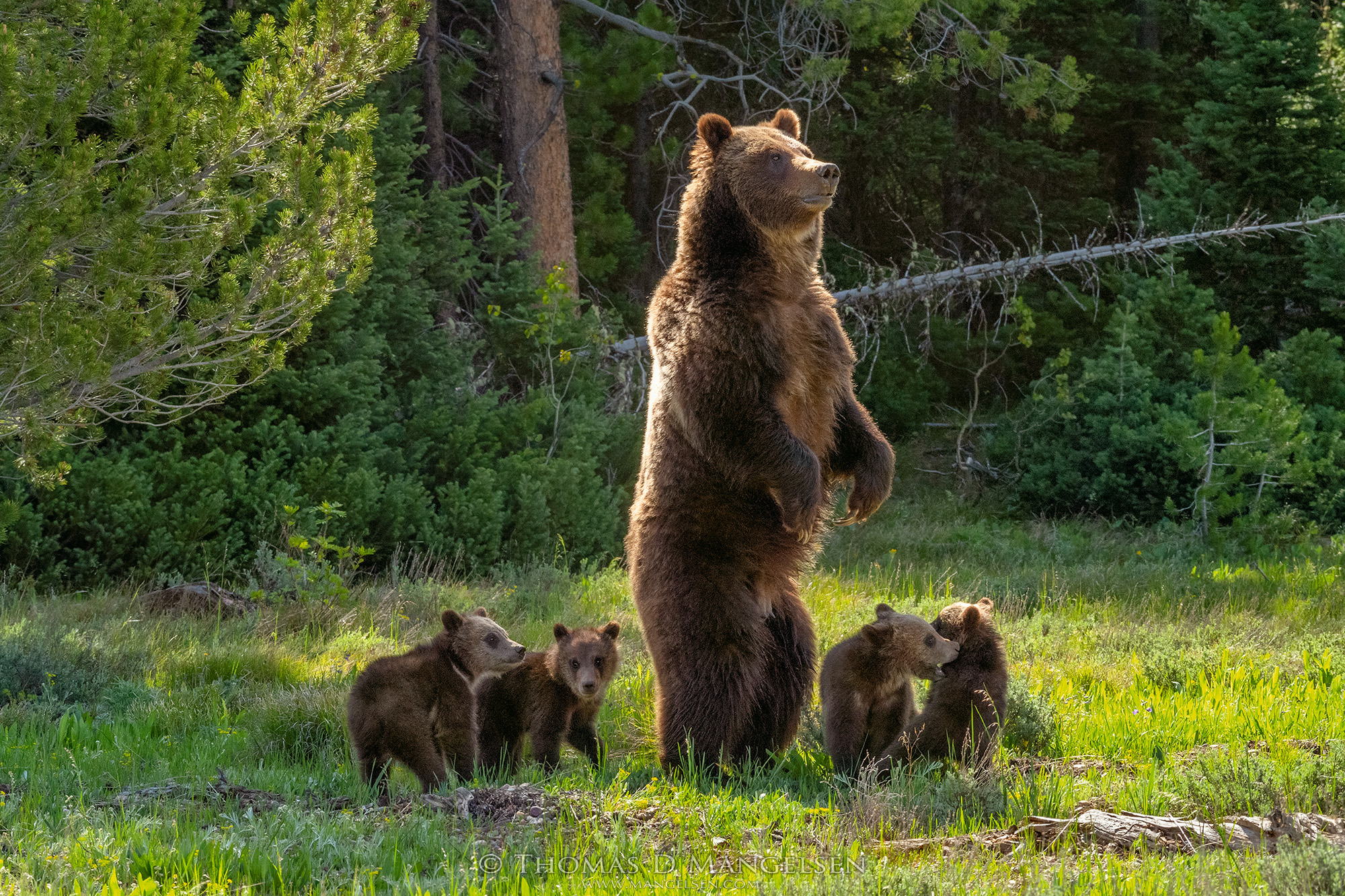
Grizzly Bear (Ursus arctos horribilis)

The grizzly bear, a subspecies of the brown bear, is a formidable presence in North America’s wilderness. Known for its muscular build, large shoulder hump, and distinctive grizzled fur, this bear is a top predator and an essential part of the ecosystems it inhabits. Grizzly bears are omnivorous, with a diet that includes fish, berries, and insects, and they play a crucial role in seed dispersal and nutrient cycling.

African Lion (Panthera leo)

The African lion, often referred to as the “king of the jungle” (despite living in grasslands rather than jungles), is a symbol of strength and courage. Lions are social animals, living in groups called prides, which consist of several adult females, their cubs, and a few adult males. They are apex predators, and their hunting strategies are a testament to their social intelligence and cooperation.

Kangaroo (Macropus spp.)

Native to Australia, kangaroos are marsupials known for their powerful hind legs, large feet, and strong tails, which allow them to hop at great speeds. They are herbivores and play a significant role in the ecology of their environment, influencing the structure and composition of plant communities. The red kangaroo is the largest of the kangaroo species and can reach up to 1.8 meters (6 feet) in height.

Polar Bear (Ursus maritimus)

The polar bear is the world’s largest land carnivore, with males weighing up to 650-1,000 kilograms (1,433-2,205 pounds). Adapted to life in the Arctic, these bears have a thick layer of fat and a water-repellent coat that keeps them warm in the frigid climate. They are skilled swimmers and hunt primarily seals, which are their main source of food.

Rhinoceros (Rhinocerotidae)

Rhinoceroses are massive herbivores with one or two horns on their snouts. There are five species of rhinos, found in Africa and Asia, each facing various threats, including habitat loss and poaching. The white rhinoceros is the largest, while the Sumatran and Javan rhinos are among the most endangered.

These majestic mammals are more than just impressive creatures; they are vital components of their ecosystems, playing key roles in maintaining biodiversity and ecological balance. However, many of these species face threats from habitat destruction, poaching, and climate change. Conservation efforts are crucial to protecting these magnificent animals and ensuring that future generations can marvel at their grandeur in the wild.

The Empire of Extravagance: The World’s Costliest Items

organicjuicebardc.com – In a world where luxury knows no bounds, there exists an empire of extravagance where the costliest items are not just possessions but statements of unparalleled wealth and taste. This guide takes you on a journey through the realm of the ultra-rich, where money is no object, and the pursuit of the most expensive is a way of life. From automobiles to real estate, jewelry to art, and even the rarest of experiences, the empire of extravagance is a testament to human creativity and the lengths to which some will go to own the world’s most exclusive treasures.

Automobiles:
The world of luxury cars is where engineering meets art, and the price tags can soar into the tens of millions. The Bugatti La Voiture Noire, for instance, is a masterpiece that comes with a price tag of $18.7 million. This isn’t just a car; it’s a piece of automotive history, designed to turn heads and set hearts racing. For those who prefer something more exclusive, the Rolls-Royce Sweptail is a bespoke masterpiece that cost its owner a staggering $13 million.

Real Estate:
Real estate in the empire of extravagance is not just about having a place to live; it’s about owning a piece of the planet that no one else does. The most expensive penthouse in the world, located in Monaco, is valued at $335 million. It’s not just the view of the Mediterranean that commands such a price, but the unparalleled luxury and exclusivity that come with it. For those who prefer a more traditional estate, the Buckingham Palace in England, though not for sale, is valued at an estimated $2.9 billion, showcasing the pinnacle of real estate extravagance.

Jewelry:
Jewelry is the ultimate expression of personal luxury, and the world’s costliest pieces are nothing short of legendary. The Pink Star diamond, weighing in at 59.60 carats, was sold for $71.2 million, making it one of the most expensive diamonds ever sold at auction. The Graff Diamonds Hallucination necklace, with its vibrant array of colored diamonds, is valued at an astonishing $15.9 million, showcasing the pinnacle of craftsmanship and rarity in the world of jewelry.

Art:
Art has always been a playground for the wealthy, with prices reaching astronomical figures. Leonardo da Vinci’s “Salvator Mundi” was sold for $450.3 million, making it the most expensive painting ever sold at auction. This masterpiece is not just a piece of art but a window into the genius of one of history’s most revered artists. For contemporary tastes, Jean-Michel Basquiat’s “Untitled” fetched $110.5 million, reflecting the modern art world’s hunger for the unique and the provocative.

Experiences:
In the empire of extravagance, even experiences come with a price tag that would make most people’s jaws drop. The most expensive holiday package can cost upwards of $1 million, offering an around-the-world trip in private jets and stays in the most luxurious suites imaginable. For the ultimate in exclusive experiences, a seat on a space tourism flight can cost around $250,000, offering the few who can afford it a view of Earth that most can only dream of.

Conclusion:
The empire of extravagance is a world apart, where the costliest items are not just purchases but symbols of the pinnacle of human achievement in luxury and craftsmanship. Whether it’s the most expensive car, a piece of real estate with a view to die for, a rare diamond, a masterpiece of art, or an experience that money can barely buy, this guide has taken you on a journey through the realm where money truly knows no bounds. It’s a testament to human creativity and the lengths to which some will go to own the world’s most exclusive treasures. For those who can afford it, the empire of extravagance offers a life where the sky is not the limit, but merely the beginning.

Hiking the World’s Greatest Paths: Trailblazer’s Paradise

For the intrepid explorer, there’s nothing quite like the thrill of hiking through some of the world’s most breathtaking landscapes. From the rugged peaks of the Himalayas to the serene trails of New Zealand’s Fiordland, the planet is brimming with paths that promise adventure, solitude, and unparalleled natural beauty. This article takes you on a journey through some of the world’s greatest hiking trails, each offering a unique experience that caters to the adventurer within us all.

  1. The Pacific Crest Trail (PCT), USA
    Stretching over 2,650 miles from Mexico to Canada through California, Oregon, and Washington, the Pacific Crest Trail is a rite of passage for many American hikers. It traverses three national parks, 7 national forests, and 25 wilderness areas, offering a diverse range of ecosystems from desert to high mountain terrain. The PCT is not just a trail; it’s a journey that tests the limits of endurance and offers profound personal growth.
  2. The Inca Trail, Peru
    The Inca Trail to Machu Picchu is perhaps one of the most famous hikes in the world. This four-day trek through the Andes Mountains offers a glimpse into the ancient world of the Incas, with stunning ruins, panoramic views of the mountains, and lush cloud forests. The trail culminates at the Sun Gate, where hikers are greeted with the first view of the legendary Machu Picchu, a moment that is nothing short of magical.
  3. The West Highland Way, Scotland
    Scotland’s oldest long-distance path, the West Highland Way, is a 96-mile trail that starts in Milngavie, just outside Glasgow, and ends at Fort William. The trail offers a quintessential Scottish experience, with rugged hills, deep lochs, and historic sites. The highlight is the approach to Fort William, where hikers are shadowed by the towering presence of Ben Nevis, the UK’s highest peak.
  4. The Tour du Mont Blanc, France/Italy/Switzerland
    Encircling Western Europe’s highest peak, Mont Blanc, this 110-mile trail is a dream for alpine enthusiasts. Crossing through France, Italy, and Switzerland, the route offers stunning views of glaciers, alpine meadows, and the iconic Matterhorn. The trail is well-marked and offers a range of accommodation options, making it accessible for hikers of various experience levels.
  5. The Milford Track, New Zealand
    Dubbed the “finest walk in the world” by Rudyard Kipling, the Milford Track is a 32-mile hike through Fiordland National Park. It takes four days to complete and offers an intimate experience with New Zealand’s untamed wilderness. Hikers are treated to views of towering peaks, deep valleys, and crystal-clear lakes, all set against a backdrop of temperate rainforest.
  6. The Annapurna Circuit, Nepal
    The Annapurna Circuit is a 160-mile trek around the Annapurna Massif in Nepal. It takes about 18-23 days to complete and offers a diverse range of landscapes, from lowland rice terraces to high-altitude deserts. The highlight is the Thorung La Pass at 17,769 feet, which provides a heart-stopping view of the Annapurna range.
  7. The Camino de Santiago, Spain
    The Camino de Santiago, or the Way of St. James, is a network of pilgrims’ ways leading to the shrine of the apostle Saint James the Great in the cathedral of Santiago de Compostela in Galicia in northwestern Spain. The French Way (Camino Francés), starting in Saint-Jean-Pied-de-Port, is the most popular route. It’s a journey of spiritual reflection, with each step bringing pilgrims closer to the rich history and culture of Spain.

Conclusion:
The world’s greatest hiking paths are more than just trails; they are gateways to some of the most profound experiences life has to offer. They challenge us, inspire us, and ultimately, reward us with memories that last a lifetime. Whether you’re a seasoned hiker or a curious novice, there’s a trail out there waiting to be discovered. So lace up your boots, pack your bag, and set out on an adventure to find your own trailblazer’s paradise.