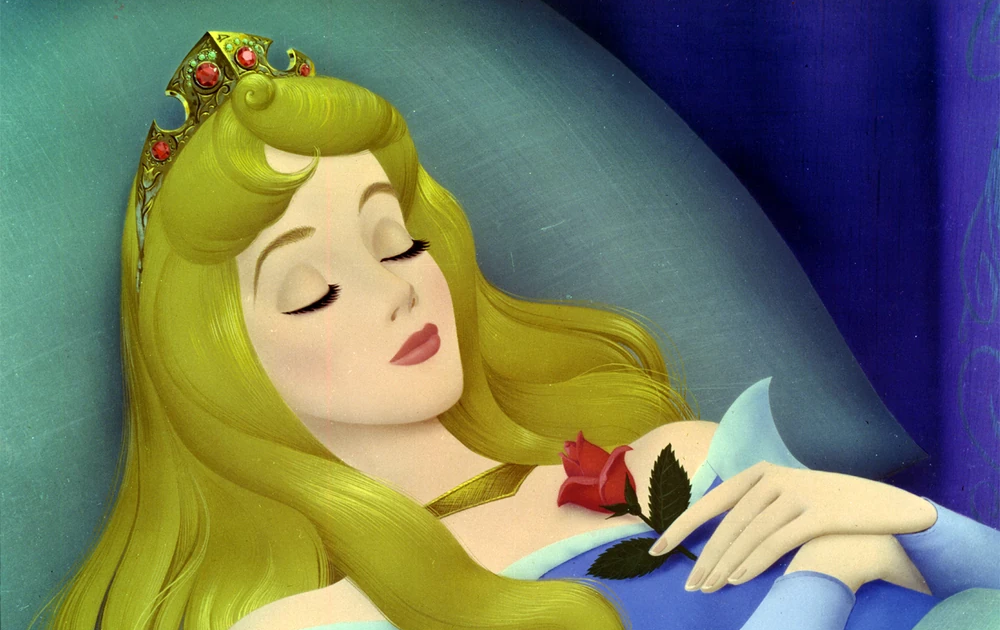
The Enchanting Tale of Aurora: “Sleeping Beauty” (1959)

organicjuicebardc.com – In the realm of animated fairy tales, few characters captivate the imagination quite like Aurora from Disney’s “Sleeping Beauty” (1959). Known for her ethereal beauty and the tragic curse that befalls her, Aurora, also known as Sleeping Beauty, has become an iconic figure in the world of Disney princesses. Her story, a blend of magic, romance, and adventure, continues to enchant audiences across generations.

The Origins of Aurora

Aurora’s tale is rooted in the classic fairy tale “The Sleeping Beauty” by Charles Perrault and later adapted https://calamariarestaurant.com/ by the Brothers Grimm. Disney’s version, released in 1959, took creative liberties to craft a unique narrative that would resonate with audiences. The film’s lush animation, memorable music, and compelling characters have cemented its place in the annals of Disney animation history.

The Story of Sleeping Beauty

The story of Aurora begins on the day of her christening. As the three good fairies bestow their gifts upon her, Maleficent, the sole uninvited guest, arrives to cast a curse upon the infant princess. She decrees that Aurora will prick her finger on the spindle of a spinning wheel and die before the sun sets on her sixteenth birthday. In a desperate attempt to save her, the good fairies whisk Aurora away to a cottage in the forest, hoping to hide her from Maleficent’s curse.

Aurora grows up in the forest, unaware of her royal lineage, and is given the name Briar Rose by the fairies. On the eve of her sixteenth birthday, she meets Prince Philip, and the two fall in love, unaware of their true identities. However, fate intervenes, and Aurora, under the guise of Briar Rose, meets her destiny when she pricks her finger and falls into a deep sleep, fulfilling Maleficent’s curse.

The Power of True Love

The climax of “Sleeping Beauty” revolves around the theme of true love, a recurring motif in Disney’s fairy tales. Prince Philip, learning of Aurora’s plight, embarks on a perilous journey to save her. With the help of the three good fairies, he battles Maleficent, who has transformed into a fearsome dragon. In the end, it is the power of true love that breaks the curse, awakening Aurora from her slumber and defeating Maleficent once and for all.

Legacy and Impact

Aurora’s story, with its themes of love, sacrifice, and the battle between good and evil, has left a lasting impact on the world of animation and beyond. Her character, embodying innocence and beauty, has become a symbol of hope and resilience. “Sleeping Beauty” itself is celebrated for its artistic achievements, including its detailed backgrounds, fluid animation, and the innovative use of the xerography process, which allowed for more detailed character designs.

The film’s soundtrack, featuring the work of composers George Bruns and Oliver Wallace, has also been praised for its musical score and memorable songs, such as “Once Upon a Dream.”

Conclusion

Aurora, with her enchanting story and timeless beauty, remains a beloved figure in the Disney canon. “Sleeping Beauty” (1959) continues to captivate audiences with its blend of magic, romance, and adventure. As one of Disney’s most iconic princesses, Aurora’s legacy is a testament to the enduring power of fairy tales and the universal themes they explore.
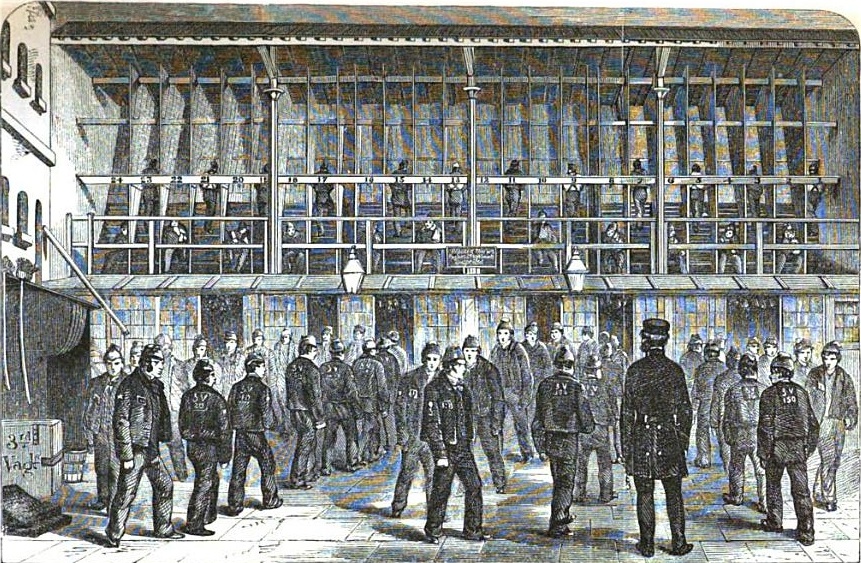
Tales from Britain’s Most Notorious Prisons: Victorian Lockup

organicjuicebardc.com – The Victorian era, spanning from 1837 to 1901, was a period of significant change in Britain. This era, named after Queen Victoria, saw the expansion of the British Empire, the Industrial Revolution, and the birth of the modern prison system. The Victorian lockups, as they were known, were not just places of confinement but also sites of punishment, reform, and, at times, brutality. These institutions have left behind a legacy of tales that reflect the complexities of the society from which they emerged.

One of the most notorious prisons of the Victorian era was the Pentonville Prison in London. Established in 1842, Pentonville was designed to embody the principles of separate confinement, where prisoners were kept in solitary cells for up to 23 hours a day. The regime was intended to promote reflection and reform, but it often led to mental anguish and despair among the inmates. The prison’s design, with its radial layout and the “separate system,” influenced penal reforms worldwide.

Another infamous institution was Millbank Prison, which opened in 1816 on the site of what is now the Tate Britain art gallery. Millbank was initially built to house prisoners awaiting transportation to the colonies. However, as transportation declined, the prison became notorious for overcrowding and disease. The conditions were so dire that it led to public outcry and eventually to the prison’s closure in 1890.

The Victorian era also saw the rise of public executions as a form of deterrence and spectacle. Newgate Prison, located in the heart of London, was the site of many public hangings. The last public execution took place in 1868, after which hangings were conducted within the prison walls. The move from public to private executions reflected a shift in the philosophy of punishment, from spectacle to reform.

Women’s experiences in Victorian prisons were particularly harsh. Female prisoners were often subjected to additional scrutiny and moral judgment. One of the most notorious women’s prisons was Holloway Prison, which opened in 1852. Holloway was designed to house female offenders, including many who were incarcerated for minor offenses or for being victims of societal norms, such as prostitution. The prison became a symbol of the struggle for gender equality in the justice system.

The Victorian prison system was not just about punishment; it also sought to reform and rehabilitate. This was evident in the establishment of workhouses, which were intended to provide shelter and employment for the poor. However, the conditions in workhouses were often grim, and they became associated with the stigma of poverty. Charles Dickens famously criticized the workhouse system in his novels, highlighting the inhumanity of the institutions.

The tales from Britain’s most notorious Victorian prisons are a testament to the era’s complexities. They reveal a society grappling with issues of crime, punishment, and reform. The prisons were microcosms of the broader social and economic changes taking place in Britain. They were sites of suffering but also of resilience and survival. As we look back on these institutions, we can learn much about the human condition and the evolution of our justice system.

Today, many of these prisons have been demolished or repurposed, but their stories live on. They serve as a reminder of the challenges faced by previous generations and the ongoing quest for a more humane and effective system of justice. The Victorian lockups may be relics of the past, but their legacies continue to shape our understanding of crime, punishment, and the possibilities for redemption.

The Modern Princess: From Fairy Tales to Reality

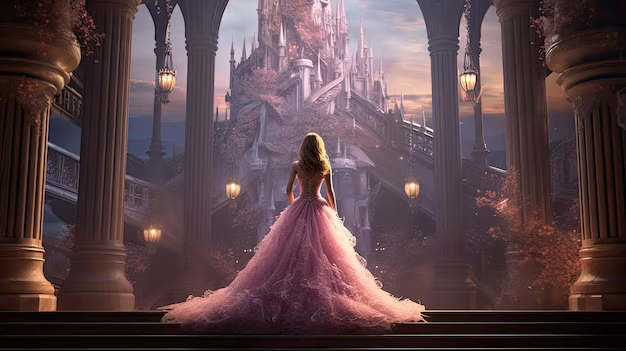
organicjuicebardc.com – Once upon a time, fairy tales painted the picture of a princess as a damsel in distress, waiting for her prince charming to come and rescue her from her mundane life. However, as society has evolved, so too has the archetype of the princess. Today, the modern princess is a far cry from her passive predecessor, embodying strength, independence, and a fierce determination to shape her own destiny. This transformation is not just a reflection of changing storytelling but a mirror to the aspirations and achievements of contemporary women.

The Evolution of the Princess Archetype

The traditional fairy tale princess was often characterized by her beauty, grace, and vulnerability. She was the epitome of femininity, but her story usually revolved around her need for a male savior. From Sleeping Beauty’s Aurora to Cinderella, these characters were defined by their waiting—waiting for a spell to be broken, waiting for a ball, waiting for a prince. Their agency was limited, and their stories were more about endurance than action.

However, as the 20th century progressed, the narrative began to shift. Disney’s Belle from “Beauty and the Beast” was an early harbinger of change, showing a princess who was not only book-smart but also brave and willing to challenge the norms of her society. This was a significant departure from the passive princesses of yore.

The Modern Princess: Redefining Royalty

The modern princess is not confined to the pages of storybooks or the screens of animated films. She walks among us, in the form of women who are breaking barriers and redefining what it means to be a leader, a thinker, and a doer. This new breed of princesses is not waiting for a prince or a happy ending to be bestowed upon them; they are creating their own.

  1. Empowerment and Education: Modern princesses understand the power of education and empowerment. They are not just pretty faces but are also well-educated individuals who are not afraid to speak their minds. They advocate for equal rights and opportunities for all, using their platforms to raise awareness about important issues.
  2. Independence and Career Ambition: Gone are the days when a woman’s success was measured by her marital status. Today’s princesses are building empires, leading companies, and excelling in their chosen fields. They are entrepreneurs, scientists, artists, and activists, proving that a woman’s worth is not defined by whom she marries but by what she accomplishes.
  3. Strength and Resilience: The modern princess is not afraid to show her strength. She faces challenges head-on and uses her experiences, both good and bad, to grow and inspire others. Her resilience is her crown, and she wears it proudly, showing that true strength lies in vulnerability and the ability to rise after falling.
  4. Philanthropy and Social Change: Many modern princesses are using their influence to make a positive impact on the world. They are involved in philanthropic efforts and social change initiatives, working towards a more equitable and just society. Their commitment to helping others is a testament to their character and a reflection of their desire to leave a lasting legacy.

The modern princess is not a fantasy; she is a reality. She is a symbol of progress, a beacon of hope, and a reminder that every woman has the potential to be her own kind of royalty. She does not need a prince or a palace to validate her existence; she is complete in herself.

In conclusion, the transformation from the fairy tale princess to the modern princess is a narrative of empowerment, independence, and self-discovery. It is a story that celebrates the strength and capabilities of women everywhere. As we continue to redefine what it means to be a princess in the 21st century, let us remember that true royalty lies in the courage to be ourselves and the determination to make a difference in the world.

Tales from a Haunted Inn: The Ghostly Presence

organicjuicebardc.com – Nestled in the heart of a quaint, cobblestoned village, where the whispers of history seem to linger in the air, there stands an inn that has become the subject of legend and lore. The inn, with its ivy-clad walls and creaky floorboards, has been a haven for weary travelers for centuries. Yet, it is not just the warmth of its hearth or the charm of its antique furnishings that draws visitors from far and wide. It is the ghostly presence that is said to roam its halls, a presence that has given the inn its notoriety and intrigue.

The inn’s haunted reputation began in the late 18th century, when a young maid named Eliza was found weeping in the cellar, her heart broken by a love that was never to be. Eliza’s sorrow was so profound that it is said she never left the inn, her spirit bound to the place by her unrequited love. Since then, guests and staff alike have reported sightings of a spectral figure that drifts through the corridors, her ethereal sobs echoing through the empty rooms at night.

One of the most chilling tales comes from a guest who stayed in what is now known as “Eliza’s Room.” The guest, a skeptic of the supernatural, awoke in the dead of night to the sound of soft weeping. As his eyes adjusted to the darkness, he could make out the faint outline of a woman sitting at the foot of his bed, her head bowed in sorrow. The next morning, the guest, now a believer, found a single, wilted rose on his pillow, though none had been there when he retired for the night.

The inn’s staff has grown accustomed to the ghostly presence, often attributing the inexplicable chill in the air or the occasional misplaced item to Eliza’s playful spirit. Some have even reported feeling a comforting presence, as if Eliza were watching over them, ensuring their stay is as pleasant as possible.

But Eliza is not the only spirit said to haunt the inn. There are whispers of a shadowy figure that prowls the attic, the remnants of a former innkeeper who met a mysterious end. Guests who have dared to explore the attic have returned with tales of feeling an overwhelming sense of dread, as if being watched by unseen eyes.

Despite the ghostly tales, the inn remains a popular destination. Thrill-seekers and paranormal enthusiasts flock to the inn, hoping to catch a glimpse of Eliza or to uncover the secrets of the shadowy figure in the attic. The inn has even hosted ghost hunts, where participants armed with electromagnetic field detectors and thermal cameras attempt to make contact with the spirits.

The inn’s owners, while acknowledging the stories, maintain that the spirits, if they exist, are harmless. They believe that the ghostly presence adds to the inn’s charm, providing an experience that guests won’t find anywhere else. They take pride in the inn’s history and its haunted reputation, often sharing the tales with guests over a crackling fire in the cozy lounge.

As the night falls and the inn settles into the quiet of the evening, one can’t help but wonder about the truth behind the tales. Is it the creak of an old building settling, or the footsteps of a restless spirit? Is the chill in the air a draft from a window left ajar, or the presence of something otherworldly?

The Ghostly Presence: Tales from a Haunted Inn is not just a collection of spooky stories; it’s an invitation to step into a world where the past and the present collide, where the veil between the living and the dead is thin, and where every stay promises an encounter with the unknown. Whether you’re a believer or a skeptic, the inn stands ready to welcome you, its doors open to those brave enough to experience its haunted history firsthand.