
The Daring Leap into the History Books: Red Bull Sky High Dive

organicjuicebardc.com – The world of extreme sports is no stranger to breathtaking feats, but the Red Bull Sky High Dive stands out as a monumental achievement that pushed the boundaries of human endurance and technology. This daring event, which took place on [insert date], was not just a dive; it was a leap into the history books, captivating the hearts and minds of millions around the globe.

The Prelude to Greatness

Before the dive, the world watched with bated breath as preparations were meticulously made. The athlete chosen for this monumental task was [insert athlete’s name], a seasoned professional with an unparalleled record in skydiving and BASE jumping. [Athlete’s name] trained rigorously, both physically and mentally, knowing the immense risks involved in such an unprecedented endeavor.

The Record-Breaking Dive

On the day of the event, the atmosphere was electric. From a stratospheric altitude of [insert altitude], [Athlete’s name] stepped off the platform, beginning a freefall that would last for minutes. The silence of the stratosphere was soon broken by the roar of the atmosphere as [Athlete’s name] accelerated towards Earth, reaching speeds of over [insert speed] miles per hour.

The dive was more than a test of courage; it was a scientific experiment. The data collected during the descent provided invaluable insights into human physiology and the effects of high-speed, high-altitude exposure. The suit designed for the dive, a cutting-edge piece of technology, allowed [Athlete’s name] to control the descent with precision, maneuvering through the sky like a human bird.

The Impact on the World

The Red Bull Sky High Dive was more than just a record-breaking stunt; it was a testament to human spirit and ingenuity. It showcased the lengths to which we will go to push the boundaries of what is possible. The event inspired a new generation of athletes and scientists, proving that with the right combination of courage, technology, and determination, there are no limits to what we can achieve.

Legacy

Years after the dive, the Red Bull Sky High Dive remains a landmark event in the annals of extreme sports. [Athlete’s name]’s name is synonymous with bravery and innovation, and the dive itself serves as a beacon of inspiration for those who dare to dream big. As we look to the future, it’s clear that the legacy of the Red Bull Sky High Dive will continue to inspire and challenge us to reach new heights, both literally and metaphorically.

In conclusion, the Red Bull Sky High Dive was more than just a dive; it was a statement about the human condition. It reminded us that with courage and innovation, we can defy the odds and achieve the extraordinary. As we continue to push the boundaries of what is possible, the spirit of the Red Bull Sky High Dive will forever be a guiding light, urging us to reach for the stars and beyond.
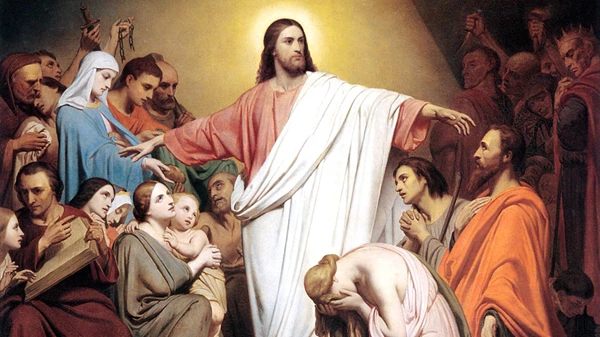
From Jesus to Today: The History of Christianity

organicjuicebardc.com – The history of Christianity begins with the life of Jesus Christ, who was born in Bethlehem around 4 BC. According to Christian belief, Jesus was both fully divine and fully human, sent by God to redeem humanity from sin. His teachings, as recorded in the New Testament of the Bible, emphasized love, forgiveness, and the Kingdom of God. Jesus’ ministry lasted for about three years, during which he performed miracles, taught in parables, and gathered a group of twelve disciples. His life culminated in his crucifixion under Pontius Pilate, followed by his resurrection, which Christians believe demonstrates his divine power and authority.

The Early Church

After Jesus’ ascension to heaven, his disciples began to spread his teachings throughout the Roman Empire. The early church faced persecution from Roman authorities, who saw Christianity as a threat to the empire’s religious and political stability. Despite this, the church grew, aided by the efforts of missionaries like Paul the Apostle, who is credited with bringing Christianity to the Gentiles (non-Jews). The New Testament books, written during this period, provide the foundational texts of Christian belief and practice.

The Development of Christian Doctrine

As the church grew, it faced challenges in interpreting Jesus’ teachings and in dealing with heresies. The early church councils, such as the Council of Nicaea in 325 AD, played a crucial role in establishing orthodox Christian doctrine. The Nicene Creed, formulated at this council, became a central statement of Christian belief. The development of Christian theology continued with the work of the early church fathers, who wrote extensively on the nature of God, the Trinity, and the person of Jesus Christ.

The Spread of Christianity

Christianity spread beyond the Roman Empire through missionary work. Saint Patrick is credited with bringing Christianity to Ireland, while Saint Columba and others evangelized Scotland and England. In the Eastern Roman Empire, Christianity was spread through the Byzantine missions, leading to the Christianization of the Slavic peoples. The Crusades, a series of religious wars sanctioned by the Latin Church in the medieval period, also played a role in spreading Christianity, although they are now widely regarded as a dark chapter in the religion’s history.

The Reformation

The Protestant Reformation, beginning in the early 16th century, was a major turning point in Christian history. Initiated by Martin Luther’s Ninety-Five Theses in 1517, the Reformation challenged the authority and practices of the Roman Catholic Church. It led to the establishment of Protestant denominations, such as Lutheranism, Calvinism, and Anglicanism, and sparked a period of religious wars and persecution across Europe.

Christianity in the Modern World

Today, Christianity is the world’s largest religion, with over 2 billion adherents. It is divided into three main branches: Roman Catholicism, Eastern Orthodoxy, and Protestantism. Each branch has its own traditions, theology, and practices, but all share a common belief in Jesus Christ as the Son of God and the Savior of humanity.

In the modern era, Christianity has faced challenges such as secularism, religious pluralism, and internal divisions. However, it has also seen a resurgence in some areas, particularly in the Global South, where the number of Christians is rapidly growing. Ecumenical movements have sought to promote unity among Christians, while evangelical and charismatic movements have emphasized personal devotion and missionary work.

Conclusion

From its origins in a contested land 2,000 years ago to its status as a global faith today, Christianity has undergone profound changes. Yet, at its core, it remains a religion centered on the life, death, and resurrection of Jesus Christ. As Christianity continues to evolve, it will undoubtedly face new challenges and opportunities, but its enduring message of hope and redemption continues to resonate with millions around the world.